Introduction
A Winkelbohrspindel, often referred to in English as an angular drilling spindle, has become an essential component in modern machining, especially in industries where precision and accessibility matter. As manufacturing practices evolve, so does the need for tools that can navigate tight spaces, maintain exceptional accuracy, and support increasingly complex geometries. The Winkelbohrspindel achieves this by enabling drilling, milling, or countersinking operations at specific angles—often in places that a conventional spindle cannot reach. Companies in aerospace, automotive, energy, and high-performance engineering now rely on the Winkelbohrspindel not merely as an accessory but as a critical productivity driver. Its ability to maintain torque, repeatability, and alignment makes it indispensable on production floors that operate with razor-thin tolerances.
The dynamic capabilities of the Winkelbohrspindel have expanded significantly in recent years. While early designs were simple angular heads, today’s Winkelbohrspindel models integrate advanced bearings, modular tooling systems, coolant-through technology, and vibration-damping housings. These features help reduce cycle times and improve surface finish, which is vital for operations that cannot afford rework or scrapped parts. Additionally, a high-quality Winkelbohrspindel supports multi-axis machining, allowing operators to achieve compound angles without repositioning the workpiece. This reduces setup times, minimizes operator error, and ensures consistency across large production runs.
With sustainability and cost efficiency becoming priorities, manufacturers increasingly turn to the Winkelbohrspindel to optimize workflows. By allowing machining in hard-to-reach spaces, a Winkelbohrspindel can prevent the need for specialty fixtures or additional machining passes, lowering overall tooling and labor expenses. It also expands the capability of existing CNC machines, enabling shops to take on more complex jobs without investing in entirely new equipment. As precision engineering continues to advance, the role of the Winkelbohrspindel will only grow, making it a crucial piece of technology for any shop aiming to stay competitive. Understanding its features, benefits, and applications is the first step to fully leveraging what a Winkelbohrspindel can bring to your operation.
How a Winkelbohrspindel Works
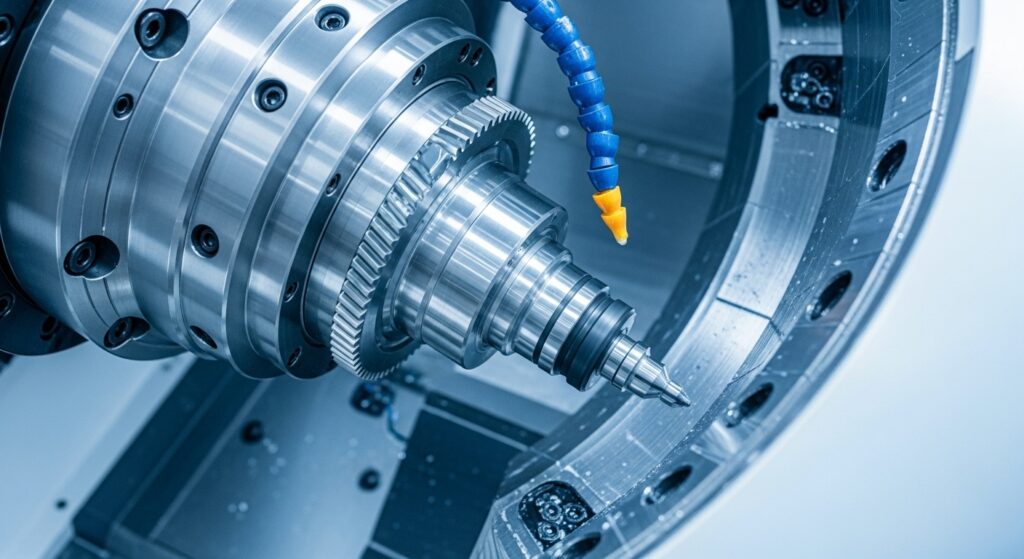
A Winkelbohrspindel operates by transmitting rotational force from the main spindle of a machine tool through a specially designed angular gearbox. This gearbox changes the direction of machining by 90 degrees or a custom angle, allowing operators to drill or mill in locations that would otherwise be inaccessible. Inside the housing of a Winkelbohrspindel, precision-ground bevel gears ensure smooth torque transfer with minimal backlash—a key factor in maintaining high machining accuracy. The bearings used in a Winkelbohrspindel are engineered for high loads, temperature stability, and longevity, ensuring consistent performance even under intense operational stress. Coolant channels further protect the Winkelbohrspindel from heat buildup, preserving geometry and extending tool life. These design features work together to deliver a stable and powerful angular machining solution.
Modern Winkelbohrspindel systems also integrate smart features such as automatic tool-change compatibility and high-speed balancing. These additions make it possible for a shop to use a Winkelbohrspindel in fully automated CNC environments without manual intervention. Sensors may be included to monitor vibration, temperature, and load, transmitting valuable data to machining centers for real-time adjustments. This ensures the Winkelbohrspindel remains stable and efficient throughout the machining process. As a result, operators are empowered to achieve exceptionally low deviation levels, even in materials like titanium or hardened steel. Ultimately, these engineering advancements highlight why the Winkelbohrspindel remains a crucial asset in precision manufacturing.
Read More: ArtisticAssasins
Key Applications of a Winkelbohrspindel
The Winkelbohrspindel is widely used in industries where accessibility and accuracy are vital. In aerospace manufacturing, intricate airframe components often require angled access points that only a Winkelbohrspindel can provide. From turbine casings to wing assemblies, these parts demand exceptionally tight tolerances, and the Winkelbohrspindel helps maintain both positional accuracy and surface finish. Automotive manufacturers also use the Winkelbohrspindel for engine block machining, transmission housings, and suspension components. These parts frequently include deep pockets or intersecting geometries where a Winkelbohrspindel is the most efficient solution. Additionally, the medical device industry uses the Winkelbohrspindel to create precise orthopedic implants and surgical tools that require exact angular features.
Another rapidly growing field for the Winkelbohrspindel is renewable energy. Wind turbine hubs, for example, often require angle-specific drilling and milling operations best performed with a Winkelbohrspindel. The energy sector also uses the technology for machining valve bodies, pipeline connectors, and drilling equipment components. These parts must withstand extreme pressures and environmental conditions, and a Winkelbohrspindel ensures they are manufactured to the highest quality standards. Even small fabrication shops have discovered that the Winkelbohrspindel expands their machining capabilities, enabling them to take on more complex projects without investing in additional machinery. As diverse industries continue to innovate, the Winkelbohrspindel remains a versatile tool that adapts to many advanced manufacturing needs.
Benefits of Using a Winkelbohrspindel
One of the primary benefits of a Winkelbohrspindel is its ability to dramatically improve machining accessibility. When working on parts with complex internal structures or difficult angles, conventional tooling may not suffice. The Winkelbohrspindel resolves this by providing angular access without sacrificing spindle strength or precision. This reduces the need for additional setups, which can save hours of production time. By minimizing repositioning, a Winkelbohrspindel helps reduce tolerance stack-up and improves dimensional accuracy across entire production batches. The result is a more efficient workflow and fewer errors, leading to higher quality finished components.
Another key benefit is enhanced versatility. With a Winkelbohrspindel, manufacturers can expand their range of machining capabilities without purchasing new multi-axis equipment. A Winkelbohrspindel can often be used with existing CNC machines, making it a cost-effective upgrade. It supports heavy-duty as well as delicate operations, making it suitable for a wide variety of industries. Additionally, coolant-through capabilities allow tools within the Winkelbohrspindel to remain cool and lubricated, improving tool life and reducing wear. This operational efficiency leads to longer service intervals, lower maintenance costs, and improved overall productivity.
Choosing the Right Winkelbohrspindel
Selecting the right Winkelbohrspindel involves evaluating several technical factors. One key consideration is torque requirements. Different machining operations demand varying torque levels, and choosing a Winkelbohrspindel that matches your torque needs ensures smooth cuts and consistent performance. You must also consider the spindle speed range. A Winkelbohrspindel designed for high-speed operations may not deliver optimal torque at lower speeds, and vice versa. Compatibility with your existing machine tool is also critical. Ensure that the Winkelbohrspindel integrates seamlessly with your tool-change systems and meets your machine’s power specifications.
Build quality is equally important when selecting a Winkelbohrspindel. Look for durable materials, advanced bearing systems, and precision-ground gears that can maintain alignment under load. Coolant-through capability is another feature worth prioritizing, especially when machining difficult materials. Some Winkelbohrspindel manufacturers offer customizable angles, allowing you to tailor the spindle to your specific application. It’s also wise to consult with the manufacturer to understand available support and maintenance services. Making an informed decision ensures that your Winkelbohrspindel performs reliably and contributes positively to your long-term machining goals.
Maintenance and Longevity of a Winkelbohrspindel
Routine maintenance is essential to extending the life of a Winkelbohrspindel. Regular lubrication of bearings and inspection of bevel gears helps ensure smooth torque transfer and prevents premature wear. Coolant channels should be kept clean to prevent overheating, which can compromise machining accuracy. It’s also important to monitor vibration levels during operation. Excess vibration can indicate misalignment or bearing degradation, which should be addressed promptly to protect both the Winkelbohrspindel and the machine tool. Establishing a maintenance schedule ensures consistent performance and avoids costly downtime.
Longevity also depends on proper handling and usage. The Winkelbohrspindel should be stored in a clean, dry environment when not in use, and operators should follow manufacturer guidelines regarding speed and torque limits. Using compatible high-quality cutting tools within the Winkelbohrspindel reduces stress on internal components and improves machining results. Investing in preventive maintenance can dramatically extend the service life of your Winkelbohrspindel, ensuring it remains a reliable asset for many years. With proper care, a Winkelbohrspindel can deliver exceptional performance across tens of thousands of operating hours.
Innovations in Modern Winkelbohrspindel Design
Recent advancements have transformed the Winkelbohrspindel into an even more powerful and flexible machining tool. Lightweight yet rigid materials, such as advanced aluminum alloys and composite housings, help reduce vibration and improve stability. Precision ceramic bearings have also made their way into high-end Winkelbohrspindel models, offering lower friction and greater heat resistance. Automation-compatible designs allow seamless use within robotic machining cells, expanding the possibilities for high-volume production. These innovations help the Winkelbohrspindel meet the demands of cutting-edge manufacturing environments.
Additionally, smart technology is now being integrated into many Winkelbohrspindel systems. Sensors embedded in the housing can track temperature, load, and vibration in real time. This data can be transmitted to CNC controllers or monitoring software for predictive maintenance and performance optimization. Such features ensure that the Winkelbohrspindel operates at peak efficiency while reducing the risk of unexpected failures. As Industry 4.0 technology continues to evolve, the Winkelbohrspindel is likely to become even more intelligent and capable, solidifying its role as a core player in modern machining.
Conclusion
A Winkelbohrspindel is far more than a niche accessory—it is a transformative tool that increases flexibility, precision, and productivity in machining environments across countless industries. By providing reliable angular access, the Winkelbohrspindel helps manufacturers tackle complex geometries, reduce setup times, and improve overall accuracy. Its integration into CNC systems enhances operational efficiency while supporting modern automation and data-driven machining trends. With proper selection, maintenance, and usage, a Winkelbohrspindel can serve as a long-term investment that pays substantial dividends in quality and performance.
Whether you are expanding your machining capabilities, optimizing workflow, or taking on more challenging projects, the Winkelbohrspindel offers a path toward greater efficiency and competitiveness. Understanding its features and benefits positions your operation to make informed decisions that support long-term growth. As the manufacturing landscape continues to evolve, the Winkelbohrspindel remains an essential component for shops aiming to reach the next level of precision and productivity.